Cybersecurity Audit for Defense Contractors: A Complete 2026 Guide
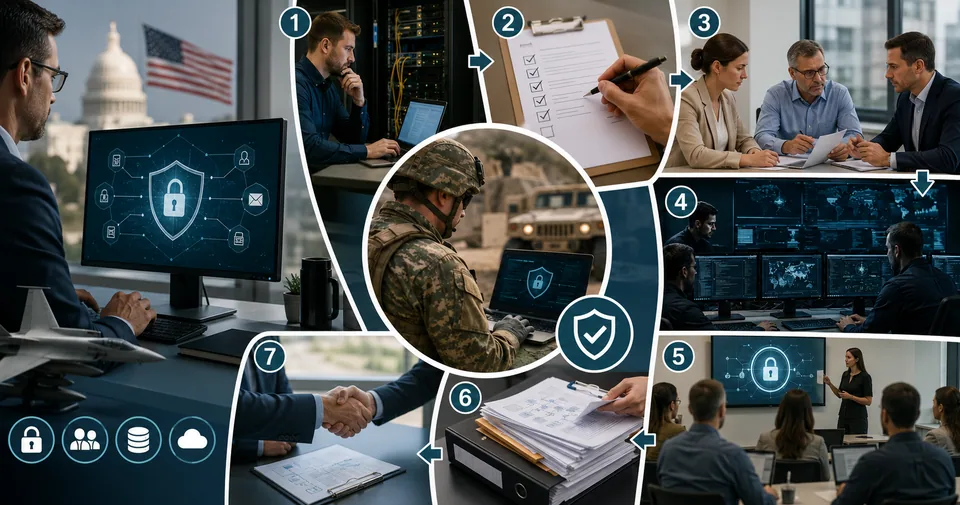
Defense contractors face a different level of scrutiny than most businesses when it comes to cybersecurity. A single gap in protecting controlled unclassified information (CUI) can mean losing a contract, facing penalties, or worse, exposing sensitive defense data. That's why a cybersecurity audit for defense contractors isn't optional in 2026 — it's a requirement built into how the Department of Defense awards and renews contracts.
What Is a Cybersecurity Audit for Defense Contractors?
A cybersecurity audit for defense contractors is a structured review of an organization's systems, policies, and controls to confirm they meet federal security requirements, primarily under the Cybersecurity Maturity Model Certification (CMMC) framework and the Defense Federal Acquisition Regulation Supplement (DFARS).
Why These Audits Exist
The Department of Defense relies on a massive supply chain of contractors and subcontractors, many of whom handle sensitive but unclassified information. A single weak link in that chain has historically been enough for adversaries to access sensitive defense data indirectly. Audits exist to close that gap before it becomes a breach.
Key Frameworks Involved
CMMC 2.0 – tiered certification levels based on the sensitivity of information handled.
DFARS 252.204-7012 – contractual clause requiring adequate security for covered defense information.
NIST SP 800-171 – the technical control baseline most CMMC requirements are built on.
NIST SP 800-172 – enhanced requirements for contractors handling higher-risk information.
What Auditors Typically Review
Access control and identity and access management (IAM) policies
Multi-factor authentication (MFA) implementation
Encryption of data at rest and in transit
Network segmentation and endpoint security controls
Incident response and recovery plans
Employee security awareness training records
System configuration and patch management history
Common Gaps Found During Audits
Auditors frequently find outdated System Security Plans (SSPs), missing Plans of Action and Milestones (POA&Ms), inconsistent MFA enforcement, and unclear documentation of how CUI flows through third-party vendors. Many contractors also struggle with proving continuous monitoring rather than one-time compliance.
How to Prepare for a Cybersecurity Audit
Conduct an internal gap assessment against NIST SP 800-171 controls before the official audit.
Document every security policy, not just implement it — auditors need paper trails.
Confirm subcontractors and vendors meet the same compliance level required for the contract.
Run a mock incident response exercise to confirm the plan actually works under pressure.
Keep evidence of employee training completion readily accessible.
Consequences of Failing an Audit
Failing to meet required cybersecurity standards can result in loss of current contracts, disqualification from future bids, and in serious cases, False Claims Act liability if a contractor falsely certified compliance. Given these stakes, many contractors bring in third-party assessors well before the official audit to catch issues early.
Who Needs This Audit
Any organization that handles Controlled Unclassified Information as part of a Department of Defense contract — from prime contractors to small subcontractors — falls under these requirements. Even companies that only touch CUI indirectly, such as through cloud storage or logistics support, are typically in scope.
Documentation and File Management During Audits
Audit preparation generates a huge volume of documentation — policies, logs, training records, and system diagrams. Keeping these organized and properly formatted matters, since auditors expect clean, verifiable records. Contractors managing large document sets often use PDF Tools to merge, compress, and organize evidence packages before submission, and Developer Tools when validating configuration files and scripts referenced in technical evidence.
For teams preparing visual network diagrams or screenshots as supporting evidence, our image tools make it easy to resize, compress, and standardize files for submission packages.
Frequently Asked Questions
Is a CMMC audit the same as a cybersecurity audit?
A CMMC assessment is a specific type of cybersecurity audit focused on Department of Defense requirements, while a general cybersecurity audit can be broader and apply to any industry.
How often do defense contractors need to be audited?
Requirements vary by CMMC level and contract terms, but self-assessments are typically expected annually, with formal third-party assessments required periodically depending on the sensitivity of information handled.
What happens if a defense contractor is not yet compliant?
Non-compliant contractors risk losing eligibility for new contracts and may need to submit a Plan of Action and Milestones showing a credible path to compliance.
Main Points
A cybersecurity audit for defense contractors is a demanding but necessary process in 2026, as the Department of Defense continues tightening supply chain security requirements. Early preparation, clear documentation, and continuous monitoring make the difference between passing smoothly and facing costly setbacks. Explore more compliance-focused content on our Read Latest Blogs page.
Related posts

Is Cyber Security One Word or Two? The Correct Answer for 2026
In 2026, "cybersecurity" as one word is the recommended standard for most professional, technical, and SEO purposes in the U.S. "Cyber security" isn't wrong, but it's the less current choice. Pick one and stay consistent. For more quick answers like this, browse our Read Latest Blogs, or learn more about how we approach content on our About Us page.

Social Engineering in Cyber Security: How Attackers Manipulate People in 2026
Social engineering isn't going away in 2026 — if anything, AI tools are making these attacks more convincing. The best defense combines healthy skepticism, verification habits, and ongoing training, backed by basic technical safeguards like MFA. For more practical guides like this one, check out our Read Latest Blogs section, and if you have questions about how our tools support safer file handling, visit our FAQs page.