Top 40 AI Writing Tools List and Compared
Admin · Aug 3, 2026

1. ChatGPT (Released November 2022)
ChatGPT changed how people write almost overnight. Instead of picking a template, you simply describe what you need in plain language, and it drafts, rewrites, or brainstorms on the spot. The canvas mode lets you edit a document side by side with the AI, which makes revision feel natural rather than clunky. It handles research summaries, blog outlines, emails, and full articles with equal ease. Writers praise its speed and flexibility, though the output usually needs a human pass to remove generic phrasing. With a free plan alongside Plus at $20/month and Pro at $200/month, it remains the default starting point for AI-assisted writing.
2. Claude (Released March 2023)
Claude, built by Anthropic, has earned a loyal following among professional writers for one reason: the prose sounds human. Reviewers in 2026 comparison tests repeatedly picked Claude for tone control and natural flow, especially on essays, newsletters, and long-form articles. Its large context window means you can paste an entire manuscript and ask for consistent edits throughout. Projects keep related drafts, notes, and style guides in one place. It is less template-driven than marketing-focused tools, so it rewards writers who know what they want and can describe it clearly. Pricing includes a free plan, Pro at $20/month, and higher Max tiers.
3. Jasper (Released February 2021)
Jasper launched as Jarvis and quickly became the best-known name in AI marketing copy. Today it positions itself as a full marketing platform rather than a simple writer. Its standout feature is Brand Voice, which studies your existing content and applies your tone across everything it generates, from ad headlines to long blog posts. Campaign tools let teams plan and produce related assets together. The trade-off is cost: with no permanent free tier and pricing starting around $69/month (or $59/month billed annually), Jasper makes the most sense for marketers producing daily content under one or two brands.
4. Copy AI (Released October 2020)
Copy AI started life as a quick short-form copywriter for ads, captions, and product blurbs, and that speed is still there. What sets it apart in 2026 is Workflows, a system that chains research, generation, and publishing steps into repeatable pipelines a whole team can run. Marketers use it to turn one product brief into ads, emails, and social posts automatically. A generous free plan (2,000 words/month) makes it easy to test, with paid plans running about $29–$49/month. Long-form article writing is weaker than dedicated SEO tools, so it fits sales and marketing teams better than bloggers.
5. Writesonic (Released February 2021)
Writesonic evolved from a template-based copywriter into an AI search visibility platform. Its Article Writer analyzes live search results before drafting, producing structured long-form posts in seconds, while Chatsonic pulls in real-time web data so facts stay current. In 2026 it added GEO tracking, which shows whether your brand appears in ChatGPT, Gemini, and Google AI Overviews answers. Bloggers like the low individual price (around $16/month); teams pay considerably more, up to $399/month, for the full platform. If ranking content is the goal rather than just writing it, Writesonic covers both halves of the job.
6. Grammarly (Founded 2009; generative AI added 2023)
Grammarly is the veteran of this list, trusted for over fifteen years as a grammar checker before adding generative AI. Its real strength is ubiquity: the same assistant follows you into Gmail, Google Docs, Word, Slack, and your browser, quietly flagging errors and suggesting clearer phrasing as you type. The newer AI features draft replies and rewrite paragraphs on request, though reviewers find them weaker than dedicated chatbots. With a free plan and Pro starting around $12/month billed annually, most people keep Grammarly as a final-pass editor layered on top of whatever tool wrote the first draft.
7. QuillBot (Founded 2017)
QuillBot built its reputation on one tool done extremely well: the paraphraser. Paste a clumsy sentence, pick a mode like Formal, Simple, or Creative, and it rewrites the text while showing exactly which words changed. Around that core, it has grown into a full suite with summarizing, grammar checking, citations, and translation in 45+ languages. The free tier is genuinely usable, which is rare in this space, and Premium costs less than almost every competitor at $8.33/month billed annually. Students and non-native English speakers make up its most enthusiastic user base.
8. Rytr (Released April 2021)
Rytr is the budget champion of AI writing. While competitors chased enterprise features and platform pricing, Rytr stayed lean: pick a template, choose a tone, and generate short-form copy in seconds for less than the cost of a coffee each month. It covers emails, product descriptions, ad copy, and blog outlines across dozens of languages. Long-form articles require assembling sections one at a time, which grows tedious, and output needs editing. But with a free plan and unlimited access from just $7.50–$9/month, no tool delivers more words per dollar spent for freelancers and small business owners watching every dollar.
9. Wordtune (Released October 2020)
Wordtune takes a different philosophy from most tools here: you write, it refines. Highlight any sentence and it offers several stronger versions, letting you shift tone from casual to formal or trim wordiness with one click. Built by AI21 Labs, it works as a browser extension across Gmail, LinkedIn, and Google Docs. The summarizer condenses long articles and videos into key points. Because it enhances rather than generates, the final text still sounds like you, which makes it popular with professionals who want polish without losing their voice. Pricing runs from a free plan (10 rewrites/day) to premium tiers around $9.99–$13.99/month.
10. Gemini (Launched as Bard in March 2023; renamed February 2024)
Gemini is Google's answer to ChatGPT, and its biggest advantage is location: it lives inside Gmail, Docs, and Drive, where much of the world's writing already happens. Ask it to draft an email, summarize a thread, or restructure a document without leaving the page. Deep Research compiles sourced, multi-page reports from dozens of websites in minutes, a genuine time-saver for content research. Writing quality has improved sharply through successive model updates. With a free plan and Google AI Pro at about $19.99/month, it's the most convenient assistant available for anyone committed to the Google ecosystem.
11. Microsoft Copilot (Released February 2023)
Microsoft Copilot embeds AI writing into the software businesses already run on. In Word, it drafts documents from a prompt, rewrites selected passages, and adjusts tone; in Outlook, it composes and summarizes email threads; in PowerPoint, it turns a document into slides. The business version can reference your company files and meetings, which makes its drafts unusually context-aware. Consumer reviewers find the writing solid though occasionally conservative. Pricing spans a free tier, Copilot Pro at $20/month, and Microsoft 365 Copilot at $30/user/month for business, removing the friction of copying text between a chatbot and your documents for organizations standardized on Microsoft 365.
12. Notion AI (Released February 2023)
Notion AI is for people whose work already lives in Notion. Rather than opening a separate chatbot, you summon the AI inside any page to draft, continue, summarize, or translate text. Its most powerful trick is Q&A: it searches your entire workspace, meeting notes, wikis, and project docs, and writes answers grounded in your own material. That makes it ideal for turning scattered notes into structured articles, briefs, or reports. As a pure prose generator it trails the frontier chatbots, but as a workspace-native assistant, available as an add-on around $10/user/month on paid plans, it has no equal.
13. Sudowrite (Founded 2020)
Sudowrite is the rare AI tool built for fiction, not marketing. Novelists use its Story Engine to move from premise to synopsis to chapters in a guided flow, while Describe expands a flat sentence into vivid sensory prose and Rewrite offers stylistic variations of any passage. It never lectures about brand voice or SEO; everything is tuned to storytelling craft. Credits-based pricing scales with how much you write, from a Hobby tier at $19/month up to Max at $59/month. Screenwriters and hobbyist authors praise it for breaking creative blocks, though heavy users note the credit system can feel opaque.
14. Anyword (Released March 2021)
Anyword approaches writing like a data scientist. Every headline, ad, or email it generates comes with a predictive performance score estimating how well that copy will convert for your target audience, based on training from billions of marketing data points. Teams use it to test variations before spending ad budget, not after. Brand voice controls and audience personas keep messaging consistent across channels. With no free plan and pricing from about $39–$49/month, it focuses on conversion-driven marketing copy rather than long articles, suiting performance marketers far better than bloggers or authors.
15. Frase (Founded 2017)
Frase owns the research phase of content writing. Give it a keyword and it dissects the top-ranking pages, extracting their headings, questions, statistics, and word counts into a structured brief in under a minute, work that once took an hour of manual tab-switching. Writers then draft inside its editor with a live optimization score. In 2026 it added tracking for how AI answer engines cite your content. Plans start around $45/month. It is lighter on keyword data than full SEO suites, but for brief-building speed, nothing beats it.
16. Surfer (Founded 2017; Surfer AI writer added 2023)
Surfer turned on-page SEO into a number. Its Content Editor compares your draft against top-ranking pages in real time, suggesting the terms, headings, and structure needed to compete, and updates a score as you write. Agencies stake client deliverables on that score. The Surfer AI add-on drafts complete optimized articles, while the audit tool finds quick wins in published content. It costs notably more than budget rivals, around $89–$99/month, and it optimizes rather than strategizes, but for teams targeting competitive keywords, it remains the reference tool in the category.
17. Scalenut (Founded 2021)
Scalenut compresses the entire SEO content workflow into one platform. Cruise Mode is the headline act: enter a keyword and it walks through title, outline, and full draft in about five minutes, complete with FAQs and structured sections. Keyword clustering groups related terms into topic maps, and a built-in humanizer smooths robotic phrasing, a feature competitors charge premium tiers for. Reviewers note the auto-inserted formatting sometimes needs stripping back, and output quality requires editing. Plans start around $39/month, packing remarkable range into its price for budget-conscious teams producing articles at volume.
18. NeuronWriter (Founded 2021)
NeuronWriter is the open secret of budget SEO writing. It analyzes top-ranking pages, generates a content score with specific term and heading recommendations, and, unusually at this price, suggests internal links from your existing content to strengthen site structure. Reviewers consistently estimate it delivers about eighty percent of Surfer's functionality for roughly a fifth of the cost, with a somewhat clunkier interface as the trade-off. Starting at $19/month with popular lifetime deals around $109, it has become a fixture among solo bloggers and small agencies, though its built-in AI drafts need heavier editing than premium rivals.
19. Hypotenuse AI (Founded 2020)
Hypotenuse AI carved out the ecommerce niche while general tools chased everyone. Online stores upload a product catalog spreadsheet and receive unique, on-brand descriptions for thousands of SKUs in a single batch run, work that would take a copywriting team weeks. It integrates with major ecommerce platforms, keeps terminology consistent through brand voice settings, and also handles blog posts and social captions. Retailers and marketplace sellers form its core audience. Plans start around $29/month with a free trial available; for businesses without large catalogs, a general-purpose tool may serve better.
20. Simplified (Founded 2021)
Simplified bets that content teams are tired of juggling subscriptions. It bundles an AI writer alongside a design editor, video tools, and a social media scheduler, so a small team can draft a caption, create the matching graphic, and schedule the post without leaving one app. The writing module covers blogs, ads, and social copy through dozens of templates. No single component beats the best dedicated tool in its category, but the combined price, starting free and running $12–$30/month, undercuts buying three or four separate products, making it a natural fit for solopreneurs and lean marketing teams.
21. TextCortex (Founded 2021)
TextCortex follows you around the web. Its browser extension activates on tens of thousands of sites, letting you draft emails in Gmail, replies in support dashboards, or posts in any CMS with the same assistant. Custom personas are the differentiator: train one on your writing samples and knowledge documents, and it drafts in your voice with your facts. European businesses appreciate its strong multilingual support. With a free plan and paid tiers from about $24/month, it receives less attention than the household names, but users who invest time in persona setup report unusually consistent, personalized output.
22. HyperWrite (Founded 2020)
HyperWrite pioneered the autocomplete approach to AI writing. Its TypeAhead feature watches as you write in any browser tab and offers sentence completions in your own style, less a ghostwriter than a very fast co-author finishing your thoughts. Over time the personal AI studies your accepted suggestions and adapts. It also includes a standard document editor and research tools for longer work. With a free tier and Premium at $19.99/month ($16/month billed annually), professionals who write high volumes of email find the always-on assistance genuinely time-saving, while writers wanting full article generation may prefer prompt-based tools.
23. ProWritingAid (Founded 2012)
ProWritingAid is the craft-obsessed editor of this list. Beyond grammar, its twenty-plus reports dissect your manuscript for overused words, sentence length variety, sticky sentences, clichés, pacing, and dialogue tags, feedback closer to a developmental editing pass than a spell check. Novelists and long-form writers form its most devoted audience, helped by rare Scrivener integration and a lifetime license option from $399 that eliminates subscription fatigue. With a free plan and Premium around $10/month, the interface presents a learning curve, and casual users may find the depth excessive, but for writers serious about improving their prose itself, nothing digs deeper.
24. Hemingway Editor Plus (Founded 2013; AI rewriting added 2023)
Hemingway Editor does one thing with total clarity: it makes writing readable. Paste your text and it color-codes hard-to-read sentences, unnecessary adverbs, passive voice, and complicated words, then assigns a grade-level score. The Plus version adds AI that actually performs the fixes, rewriting highlighted problems at the click of a button while preserving meaning. There are no templates, chat windows, or SEO scores, just ruthless simplification. With a free web version, a one-time desktop app at $19.99, and Plus plans from $10/month, bloggers, marketers, and business writers use it as a final pass to ensure their message lands with every reader.
25. Article Forge (Founded 2015)
Article Forge is one of the oldest AI writers still running, predating the modern chatbot era by years. Its pitch is total automation: enter a keyword, and it researches, writes, illustrates, and can even publish a complete article directly to WordPress without human involvement. Bulk mode queues dozens of articles at once. That hands-off approach attracts niche-site builders playing volume games, but it also draws criticism, as quality trails modern rivals and unedited output risks feeling thin. Plans start around $27/month; it works best as a draft factory whose output humans then upgrade.
26. WordAi (Founded 2011)
WordAi has been rewriting text since before most people had heard the phrase "AI writing." Unlike thesaurus-style spinners that swap synonyms, it rebuilds sentences from the ground up, changing structure and phrasing while preserving meaning, and can produce several distinct versions of the same passage. Agencies use it to adapt one piece of content for multiple placements, and the API supports high-volume pipelines. At around $57/month (roughly $27/month billed annually), in an era when every chatbot can paraphrase, its specialized edge has narrowed, but dedicated rewriting at scale remains its clear lane.
27. INK (Founded 2019)
INK combines an AI writer with an SEO optimization engine, scoring drafts against top-ranking competitors as you type in its distraction-free editor. Its distinguishing angle is protection: the platform emphasizes detecting and reducing AI-sounding patterns in generated text, aiming to keep content safe from search engine quality filters. Keyword research, meta tag optimization, and plagiarism checking round out the toolkit. Plans start around $39/month. It attracts content marketers who want optimization and generation in a single subscription, though it competes in a crowded field where Surfer and Frase have stronger name recognition.
28. GrowthBar (Founded 2020)
GrowthBar strips SEO blogging down to its essentials. Enter a keyword and it delivers search volume, ranking difficulty, and competitor insights, then walks you from AI-generated outline to complete draft in a clean two-minute workflow. A Chrome extension surfaces SEO data directly on Google results pages. It deliberately avoids the dashboard sprawl of enterprise SEO suites, which is exactly why small business owners and marketing generalists rate it so highly. Plans run about $29–$36/month; power users may eventually outgrow its intentionally limited depth, but as a starting point it removes nearly all friction.
29. LongShot AI (Founded 2021)
LongShot AI attacks the biggest weakness of AI writing: made-up facts. Its FactGPT engine generates content grounded in verifiable, current sources and flags claims in your draft for verification, attaching references so editors can check them quickly. That focus makes it popular with teams publishing in accuracy-sensitive niches like health, finance, and technology, where a single hallucinated statistic can damage credibility. Integrations with Surfer, Semrush, and WordPress fit it into existing SEO workflows. Plans start about $29/month; the interface feels more utilitarian than polished rivals, but the factual grounding justifies the trade for many teams.
30. Peppertype AI (Founded 2021)
Peppertype AI, built by Pepper Content, generates marketing copy through a template library covering blog ideas, ad copy, product descriptions, and social posts. Its parent company runs one of the larger human content marketplaces, and that DNA shows: the tool grades output quality and slots into workflows where human writers refine AI drafts. Teams appreciate collaboration features and consistent brand tone controls. Plans run about $25–$35/user/month; it targets marketing teams that want speed without fully abandoning human oversight, positioning itself as a bridge between pure AI generation and traditional agency-style content production.
31. Koala Writer (Founded 2023)
Koala Writer arrived late and grew fast by serving one audience exceptionally well: affiliate bloggers. Enter a keyword and it produces a complete, formatted article using real-time search data, and its Amazon integration automatically builds product roundups with accurate names, features, and specifications pulled from live listings. Automatic internal linking and direct WordPress publishing shorten the path from idea to live page. Plans start from $9/month, lower than nearly any serious competitor. Niche-site builders praise the output quality per dollar, though heavily edited human review remains essential for standout content.
32. BrandWell (Founded 2022)
BrandWell, formerly Content at Scale, targets publishers who need serious long-form volume. One keyword generates a complete 2,500-plus word article from multiple AI models layered together, with built-in SEO optimization and an AI-detection scanner that pushes output toward human-sounding prose. The platform has expanded into broader brand publishing with digital PR and authority-building tools. Its pricing, from about $249/month, places it firmly in the professional tier, several times the cost of budget alternatives, so it suits funded content operations and agencies rather than hobby bloggers testing the waters.
33. SEO AI (Founded 2022)
SEO AI does exactly what its name promises, folding keyword research and content generation into one loop. It identifies terms worth targeting, benchmarks the current top results, then drafts articles engineered to compete, with a live score tracking optimization as you edit. Ecommerce integrations let Shopify merchants generate optimized product and collection page copy in bulk. Danish-founded and popular across European markets, it has built a reputation for clean, structured output. Plans start from about $49/month; teams already using separate keyword tools may find overlap, but as a single-subscription solution it covers the full journey.
34. Junia AI (Founded 2023)
Junia AI competes on the strength of its long-form output at entry-level prices. It drafts complete SEO articles with automatic internal links to your existing pages, one of the more tedious optimization chores handled without effort. Bulk generation supports programmatic publishing strategies, while brand voice settings keep multi-article projects consistent. A newer entrant without the name recognition of Jasper or Writesonic, it wins users through straightforward value: capable long-form drafting, useful automation, and pricing from about $19–$34/month that undercuts the established platforms serving the same blogging and small-agency audience.
35. Lex (Released October 2022)
Lex is a word processor first and an AI tool second, a distinction serious writers appreciate. The interface resembles a stripped-down Google Docs, and the AI stays out of sight until summoned to continue a passage, suggest titles, or critique a draft with margin comments like a thoughtful editor. It never floods the page with generated text unprompted. Journalists, essayists, and authors who find chatbot interfaces disruptive to deep work form its core users. With a free tier and paid plans from about $12–$18/month, those wanting heavy generation or SEO tooling should look elsewhere; Lex optimizes for thinking, not volume.
36. Type AI (Founded 2023)
Type AI reimagines the document editor around generation. Instead of chatting in a sidebar, you issue commands directly in the document, draft this section, punch up that paragraph, and Type executes inline using leading AI models you can switch between. It suggests what to write next based on document context and handles everything from memos to full articles. The experience feels like a modern writing app rather than a chatbot with formatting. Plans start from about $29/month; professionals drafting business documents daily are the sweet spot, valuing its speed over the deeper specialization of niche tools.
37. NovelAI (Released June 2021)
NovelAI serves hobbyist storytellers rather than professional marketers. Its editor continues your prose in styles you shape, while the Lorebook feature stores characters, places, and lore that the AI consults to keep long stories internally consistent, a genuine solution to AI's notorious forgetfulness. A text-adventure mode turns writing into interactive fiction, and bundled image generation illustrates characters and scenes. Privacy-focused encryption keeps stories on your terms. Plans run $10–$25/month with a free trial; the community skews toward fantasy, science fiction, and fan fiction writers who value creative freedom above polish or productivity features.
38. Squibler (Founded 2017; AI features added 2023)
Squibler began as book-writing software and grafted AI onto an already solid manuscript manager. Writers organize novels or screenplays into chapters and scenes with drag-and-drop ease, then invoke AI to generate passages, expand outlines, or push through blocks, with templates guiding structure for fiction and nonfiction alike. Its Smart Writer can draft substantial portions from a detailed premise. The combination of project organization and generation distinguishes it from pure chatbots, which lose track of long manuscripts. Plans run about $16–$20/month; authors planning full books benefit most, while short-form writers will find it oversized.
39. DeepL Write (Released January 2023)
DeepL Write comes from the company whose translation engine famously outperformed larger rivals, and the same linguistic depth powers its writing assistant. Paste a draft and it rewrites for clarity, formality, or style while suggesting alternative phrasings word by word. Non-native English speakers, particularly across Europe, report it produces more natural corrections than mainstream grammar checkers, and its German-language support is essentially unmatched. It generates nothing from scratch, focusing purely on improving text you supply. With a free version and Pro plans from about $11/month, professionals writing across languages consider it quietly indispensable rather than flashy.
40. Smodin (Founded 2018)
Smodin bundles a dozen small utilities into one inexpensive subscription: text rewriting, AI-generated essays, plagiarism detection, automatic citations in academic formats, an AI grader that scores writing with feedback, and translation spanning over a hundred languages. No single tool leads its category, but the breadth suits students and multilingual users juggling varied tasks on tight budgets. Its global accessibility, generous free tier, and language coverage have built a large international user base. With paid plans from about $15/month, professional content teams typically outgrow it, yet as an academic companion it earns steady loyalty.
Related posts

100+ Best AI Tools List 2026: The Complete Comparison Guide
This is a full reference list of over 100 AI tools active in 2026, organized by category with the company behind each one, the year it launched, what it's actually used for, and current starting pricing.

150+ AI Image Generator Tools: The Complete 2026 Guide
The AI image generator space stopped being a two-horse race a long time ago. In 2026 there is a genuinely great tool for every job and every budget, from free browser toys to enterprise platforms with legal cover.
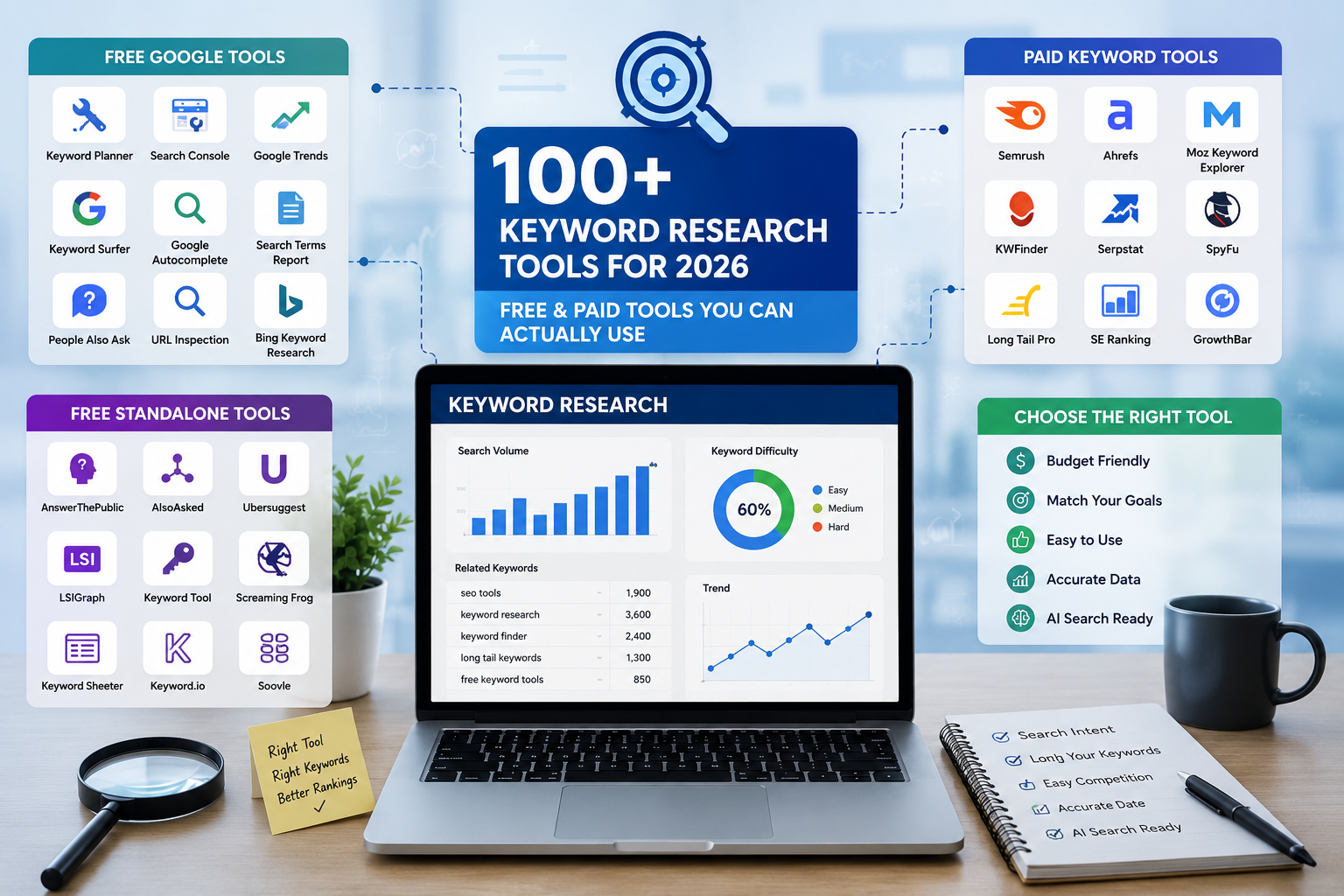
SEO Keyword Tool: 100+ Free and Paid Keyword Research Tools You Can Actually Use in 2026
This guide breaks down more than 100 free and paid keyword research tools, organized by category, so you can quickly find the ones that match your budget, your skill level, and your goals.
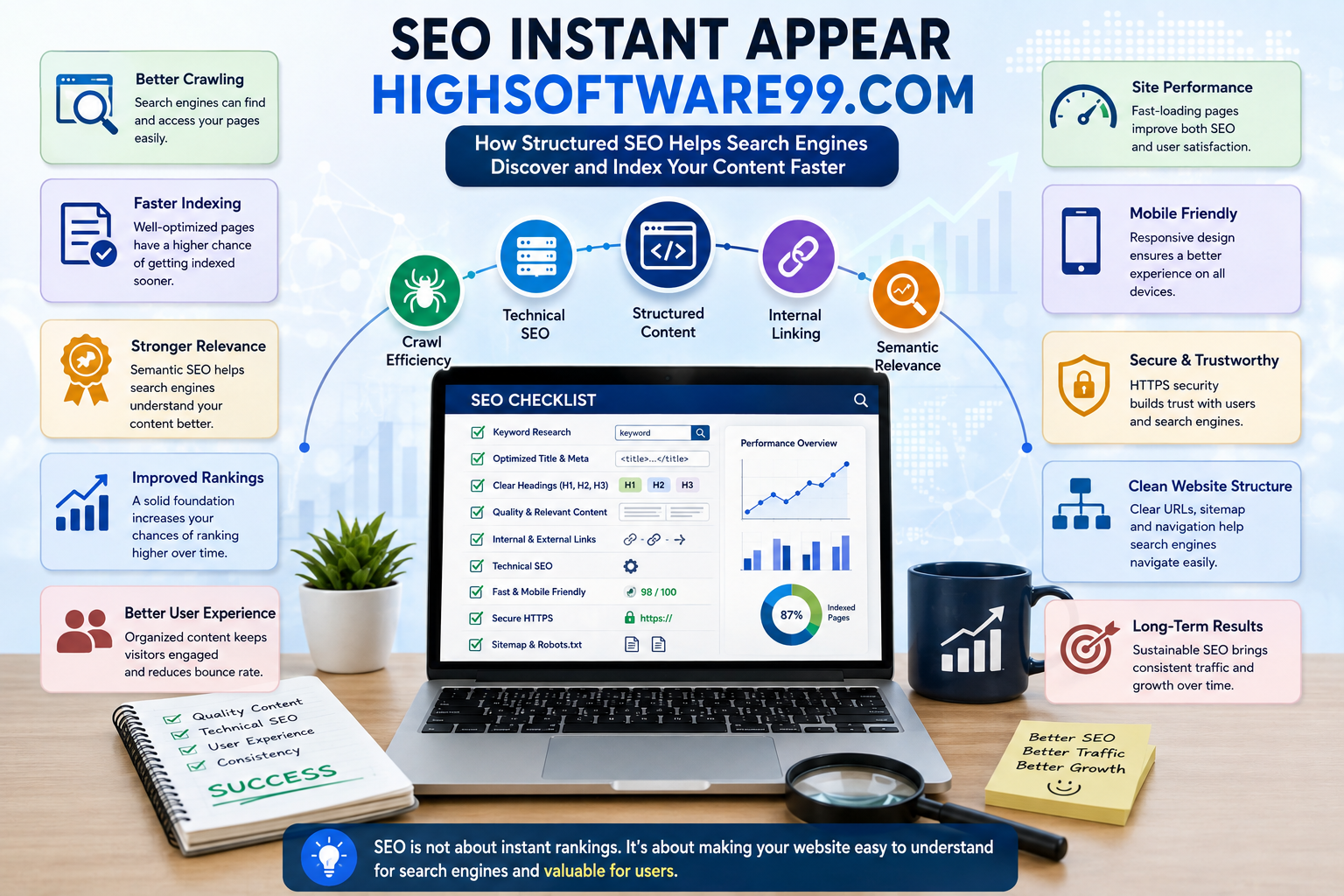
SEO Instant Appear HighSoftware99.com: A Beginners Guide to Faster Search Visibility
Getting traffic from search engines is more challenging today than ever before. A few years ago, publishing a blog post with the right keywords was often enough to attract visitors. Today, millions of websites compete for the same search terms, making it much harder for new pages to gain visibility.