Common Account Audit Software Used in Kenya: A Practical Overview

Kenya’s business and accounting landscape has changed quickly over the past decade. Between the Kenya Revenue Authority pushing for more digital compliance and local firms wanting cleaner, faster audits, accounting and audit software has gone from a “nice to have” to something most serious firms simply can’t operate without. If you’re an accountant, auditor, or business owner in Kenya trying to figure out which tools are actually in use on the ground, this guide breaks it down.
We’ll look at the types of audit software Kenyan firms rely on, some of the specific platforms that come up most often, and what actually matters when you’re choosing between them.
Why Audit Software Matters More Than Ever in Kenya
The KRA’s iTax system and the move toward electronic tax invoicing through TIMS and eTIMS have pushed businesses to keep cleaner digital records than ever before. Auditors reviewing these records manually would spend days cross-checking figures that software can flag in minutes.
On top of that, Kenyan audit firms increasingly serve clients across East Africa, which means they need software that can handle multiple currencies, different tax regimes, and remote collaboration between teams working in Nairobi, Mombasa, or even outside the country entirely.
Categories of Audit Software Kenyan Firms Use
Before naming specific tools, it helps to understand the different categories, since most firms end up using more than one type together.
General ledger and bookkeeping software — the base layer where day-to-day transactions live
Audit management platforms — used specifically for planning, executing, and documenting audits
Data analytics tools — used to sample and analyze large transaction sets for anomalies
Compliance and tax software — built around Kenyan tax law and KRA requirements
Commonly Used Platforms in the Kenyan Market
QuickBooks
QuickBooks remains one of the most widely used accounting platforms among small and mid-sized Kenyan businesses. It’s not an audit tool on its own, but auditors frequently pull client data directly from QuickBooks files during an engagement, since so many local businesses already use it for daily bookkeeping.
Sage (Sage 50 and Sage Evolution)
Sage has a long history in the Kenyan market, particularly among mid-sized companies and manufacturing businesses. Sage Evolution in particular is popular for its stronger inventory and multi-branch handling, which matters for auditors reviewing companies with several physical locations.
Pastel Accounting
Pastel is still common among smaller Kenyan businesses, especially those that adopted it years ago and haven’t felt a strong need to migrate. Auditors working with older or smaller clients will still run into Pastel files fairly often.
CaseWare
CaseWare is one of the most recognized dedicated audit tools used by professional audit firms in Kenya, including several mid-tier and Big Four affiliate firms. It’s built specifically for audit documentation, working papers, and compliance with international auditing standards, which makes it a step above general bookkeeping software.
TeamMate
TeamMate is another audit management platform used by larger firms and internal audit departments, particularly in banking and insurance, two sectors that are heavily regulated in Kenya and require detailed audit trails.
ACL Analytics (now Galvanize / Diligent)
For firms doing heavier data analytics work — testing thousands of transactions for anomalies rather than sampling a handful — ACL-based tools are common, especially among audit teams working with banks, SACCOs, and larger corporates.
Comparing the Main Options
Software | Best For | Typical Users |
|---|---|---|
QuickBooks | Day-to-day bookkeeping | Small and mid-sized businesses |
Sage 50 / Evolution | Multi-branch, inventory-heavy businesses | Mid-sized companies |
Pastel | Basic bookkeeping | Small, legacy businesses |
CaseWare | Formal audit documentation | Audit firms, mid-tier and larger |
TeamMate | Internal audit management | Banks, insurers, large corporates |
ACL / Galvanize | Data analytics and anomaly detection | Firms auditing high transaction volumes |
What to Look for When Choosing Audit Software in Kenya
Compliance With Local Tax Requirements
Not every international audit tool is built with Kenyan tax law in mind. Whatever software you choose, make sure it either supports KRA reporting formats directly or integrates cleanly with tools that do, especially around VAT and the eTIMS invoicing requirements.
Cloud Access and Remote Collaboration
More Kenyan audit teams are working across multiple client sites or even multiple countries. Cloud-based platforms let team members review working papers and client data without needing to be in the same office, which has become the norm rather than the exception since 2020.
Data Security
Audit software handles extremely sensitive financial data. Look for platforms with strong encryption, role-based access controls, and clear audit trails showing who accessed or changed what and when.
Cost Versus Firm Size
A small three-person practice doesn’t need the same tooling as a firm auditing listed companies. CaseWare and TeamMate, for example, are powerful but come with licensing costs that only make sense once a firm has reached a certain scale.
Practical Tips for Smaller Kenyan Firms
If you’re running a smaller practice and full audit management software feels like overkill for now, there are still ways to tighten up your process:
Standardize your working paper templates so every engagement follows the same structure.
Use cloud storage with proper access controls rather than emailing spreadsheets back and forth.
Build a checklist for KRA-related documentation so nothing gets missed during tax season.
Digitize paper receipts and records early, since scanned documents are far easier to audit than physical files.
For firms handling a lot of client documentation, converting scanned receipts, contracts, and statements into searchable digital files is worth doing consistently. A reliable set of PDF Tools can help combine, compress, and organize those files before they go into your working papers, and Image Tools come in handy when you’re cleaning up scanned receipts that need to be clearer before filing.
Where the Market Is Heading
Kenyan audit and accounting software is clearly moving toward cloud-first, KRA-integrated platforms. Expect more local fintech and software providers to build eTIMS compliance directly into their tools rather than requiring separate systems. Firms that get ahead of this shift — standardizing their digital records now rather than later — will have a much easier time when the next round of compliance requirements arrives.
Choosing the right combination of bookkeeping and audit software in Kenya really comes down to firm size, client base, and how much of your work involves cross-border or multi-branch clients. Start with what your team can realistically learn and use well, rather than chasing the most feature-heavy platform on the market. You can find more practical breakdowns like this one on the Toolsimpli Blog, or browse the full toolkit at Toolsimpli.
Related posts
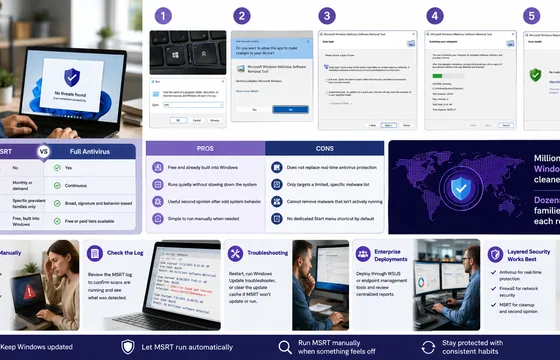
Microsoft Malicious Software Removal Tool (MSRT): The 2026 Guide
MSRT is one of those background tools that quietly does its job without asking for attention. If you manage documentation or reports around your system's security checks, the Developer Tools and PDF Tools sections can help you log and format that information cleanly. For more security-related guides, check Read Latest Blogs, browse Image Tools if you need to capture and edit screenshots of scan results, or visit the FAQs page for quick answers.

Recovery Home Management Software: What It Is and Why Your Facility Needs It
At its core, this type of software centralizes everything related to running a recovery home. Instead of keeping resident files in one place, payment records in another, and compliance documents in a folder on someone’s desktop, everything lives in one system your whole team can access.