Why Asking Artificial Intelligence Beats Telling It What to Do

Most professional services firms approach artificial intelligence the same way they approach every other piece of software: by writing detailed instructions, mapping every step, and expecting the system to follow the script exactly. That instinct made sense for spreadsheets and rule-based automation. It breaks down with AI agents. According to Rich Kent of TAINA Technology, the real unlock isn't tighter control — it's asking artificial intelligence better questions instead of handing it a rigid playbook.
This distinction matters more than it sounds. Teams that treat AI agents like traditional software often get exactly what they asked for and nothing more. Teams that shift toward asking artificial intelligence what it needs, what it recommends, and where the risks sit tend to uncover gaps in their own thinking — gaps a rigid workflow would have quietly buried.
The Old Habit: Instructing AI Like Conventional Software
AI is now woven into everyday professional workflows — tax teams use agents to research regulations, analyze large datasets, draft reports, and manage repetitive research tasks. But the tools behind these workflows aren't conventional automation. Traditional software executes fixed logic: if X happens, do Y. AI agents, by contrast, are built to reason through an objective, weigh dependencies, and propose their own approach to a problem.
The problem is that most organizations don't manage them that way. The instinct is to write a detailed process map: define every stage, specify every handoff, and dictate exactly how information should move from one step to the next. This produces consistency, but it also caps the agent's ability to flag inefficiencies, question flawed assumptions, or suggest a better path — the very things that make an AI agent worth using in the first place.
A Real-World Test: Detailed Workflow vs. a Single Objective
Kent tested both approaches while building an agentic workflow for software development. His first attempt was exhaustive: a full process map covering activities, checkpoints, documentation requirements, and how information should flow between stages. The agent followed it — but the results exposed the limits of that method. Some parts of the process were unnecessarily rigid. Others baked in assumptions about dependencies that weren't actually required. In short, the workflow reflected how a human happened to design the process, not how an AI system might have optimized it.
The second attempt looked very different. Instead of a script, Kent gave the agent a single objective and two open questions: what information would it need to complete the task effectively, and how would it recommend structuring the process?
Approach | How It Works | Typical Outcome |
|---|---|---|
Detailed instruction | Every step, checkpoint, and dependency is pre-defined by a human. | Consistent but rigid; agent cannot flag inefficiencies or missing context. |
Asking artificial intelligence | The agent is given an objective and asked what it needs and how it would structure the work. | Surfaces information gaps and proposes an adaptive, often more efficient workflow. |
When asked what it needed, the agent identified gaps around stakeholder objectives, testing expectations, governance requirements, feedback loops, and deployment constraints — items the original process map had glossed over. It then proposed a workflow built around iterative validation cycles, automated quality checks, continuous documentation, and structured feedback loops, rather than a single linear sequence of steps.
What Changes When You Start Asking Artificial Intelligence Questions
This experience points to a broader shift in how organizations need to collaborate with intelligent systems. The role of the human moves from process designer to outcome owner. The objective, the oversight, and the accountability stay firmly with people — that doesn't change, particularly in areas like tax due diligence where accuracy, compliance, and defensibility are non-negotiable. What changes is how the process itself gets designed.
For tax and professional services teams specifically, this could reshape how AI gets applied across transaction reviews, risk identification, workpaper generation, and report preparation. Rather than opening an engagement with a fully scripted set of instructions, teams increasingly need to start by
Old Mindset | New Mindset |
|---|---|
Give the agent a fixed script to follow | Give the agent a clear objective and relevant context |
Assume the human-designed process is optimal | Let the agent surface gaps and propose alternatives |
Treat the AI as an executor of instructions | Treat the AI as a collaborator in process design |
Measure success by adherence to the plan | Measure success by the quality of the outcome |
Why This Shift Reflects a Bigger Change in How Expertise Works
As AI systems become more capable, the advantage stops coming from whoever can write the most exhaustive set of instructions. It starts coming from whoever knows which questions to ask. That's a meaningful change for how expertise gets defined in professional services. Domain knowledge is still essential — but increasingly, it shows up in the quality of the questions a person poses to an agent, not just in the steps they hand it.
TAINA Technology's analysis lands on a simple conclusion: the value organizations get from AI agents depends less on how precisely they can instruct them and more on how effectively they can collaborate with them. Clear objectives, relevant context, and appropriate oversight let an AI agent contribute meaningfully to process design, while human judgment stays exactly where it belongs — at the center of every decision.
Practical Ways to Start Asking Artificial Intelligence Better Questions
Shifting from instruction-writing to question-asking doesn't require abandoning structure altogether — it requires changing what kind of structure you provide. A few practical starting points:
Instead of... | Try asking artificial intelligence... |
|---|---|
"Follow these 12 steps in this order." | "Here's the objective and constraints — how would you structure this task?" |
"Pull data from these three sources only." | "What information would you need to complete this reliably?" |
"Summarize the document in this exact format." | "What assumptions are you making, and where are you least confident?" |
"Complete every checkpoint before moving on." | "What feedback loops would help catch errors early?" |
Everyday productivity tools follow the same underlying logic on a smaller scale. Whether someone is cleaning up text with a
Where Rigid Instructions Quietly Cost Firms Value
It's worth pausing on why the instruction-heavy habit is so persistent. For decades, professional services firms have built their operating model around documented procedures — checklists, templates, and sign-off gates designed to reduce variability and protect against error. That discipline is valuable, and no one is suggesting firms abandon it. The issue is narrower: when that same documented-procedure mindset gets applied directly to an AI agent, it strips away the one capability that makes the agent worth deploying in the first place — its ability to reason about the task rather than just execute it.
A rigid workflow assumes the person who designed it already knew the best path through the problem. That's often true for stable, well-understood processes. It's much less true for tasks involving judgment, incomplete information, or shifting inputs — which describes a large share of the work in tax, audit, and advisory functions. When a firm hands an agent a fixed script for that kind of work, it isn't just limiting the agent. It's importing the blind spots of whoever wrote the script and locking them in place.
This is where asking artificial intelligence open-ended questions earns its keep. An agent that's allowed to say "I don't have enough information to do this reliably" or "here's a dependency you haven't accounted for" is providing exactly the kind of early warning that a fixed checklist cannot. Suppressing that capability in the name of consistency trades a small amount of predictability for a much larger amount of missed insight.
Building a Question-First Habit Across a Team
Shifting an entire team's default behavior from instructing to asking takes more than a one-off experiment. It tends to work best as a habit built in stages, starting small and expanding as trust in the agent's recommendations grows.
Stage | What Happens | Goal |
|---|---|---|
1. Pilot on a low-stakes task | Give the agent an objective instead of a script for something with limited downside if it gets the approach wrong. | Build comfort with the agent proposing its own structure. |
2. Compare outputs | Run the same task with a scripted workflow and a question-first workflow side by side. | Identify where the agent's approach outperforms the human-designed one. |
3. Formalize oversight | Define where human review is mandatory regardless of how confident the agent's plan looks. | Keep accountability with people even as design shifts to the agent. |
4. Scale to higher-stakes work | Apply the same question-first pattern to tasks like transaction reviews or workpaper generation. | Extend the productivity gains without loosening compliance controls. |
None of this removes the need for governance. If anything, it sharpens it — because the questions a firm asks an agent, and the assumptions that come back in response, need to be reviewed with the same rigor as any other piece of professional work product. The difference is that the review now happens on the agent's reasoning and recommended approach, rather than on whether it obeyed a script line by line.
Where This Matters Most in Tax and Advisory Work
Not every task benefits equally from a question-first approach. Highly regulated, well-defined calculations — where the correct method is fixed and known — are still good candidates for tight, scripted automation. The bigger payoff from asking artificial intelligence shows up in tasks that involve interpretation, incomplete data, or multiple plausible paths forward: scoping a due diligence review, structuring a risk assessment, or working through how to reconcile conflicting data sources ahead of a report deadline.
Task Type | Better Suited To |
|---|---|
Fixed calculations with a known correct method | Scripted, rule-based automation |
Scoping a new engagement or review | Asking artificial intelligence for a recommended structure |
Reconciling incomplete or conflicting data | Asking artificial intelligence what additional information is needed |
Drafting a first-pass report or summary | A hybrid: objective-led drafting, human-led refinement |
Final sign-off on compliance-critical output | Human judgment, regardless of how the draft was produced |
The common thread is that scripted automation still has a place — it just isn't the default anymore. Firms that keep both approaches in their toolkit, and know which situations call for which, tend to get more consistent value out of their AI investment than firms that pick one style and apply it everywhere.
A Note on Adoption Speed
One overlooked side effect of the question-first approach is how it changes adoption speed inside a firm. Detailed, scripted workflows take a long time to build correctly — every edge case has to be anticipated in advance, and the workflow often needs revisiting the moment the underlying process changes. A question-first approach front-loads far less design work. The team defines the objective, the constraints, and the guardrails, and lets the agent handle the parts of process design that used to require a lengthy internal mapping exercise.
That doesn't mean the approach is faster to trust. Teams still need time to validate an agent's recommended workflow against real outcomes before relying on it for anything client-facing. But the design cycle itself — the part that used to consume weeks of workshops and process documentation — tends to shrink considerably once a firm gets comfortable handing an agent an objective instead of a script.
The Bottom Line
AI agents aren't just faster versions of the automation tools professional services firms already use. They reason, weigh trade-offs, and can propose approaches a human process designer might never have considered. Treating them like rigid software caps their value.
The organizations getting the most out of AI agents today aren't the ones with the most detailed instruction manuals. They're the ones that have learned when to step back, hand over an objective, and let the system show its work. For teams exploring how AI-powered utilities can support that shift in smaller, everyday tasks, the
Related posts
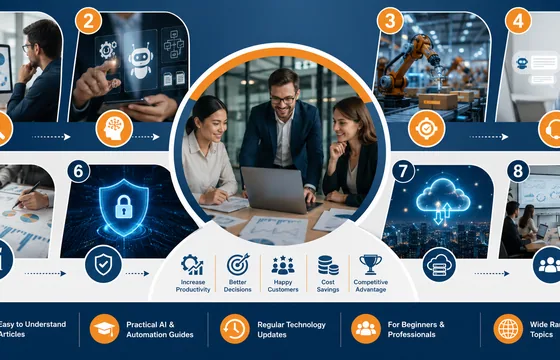
Droven.io AI for Business: A Complete Guide to Smarter Business Growth with Artificial Intelligence
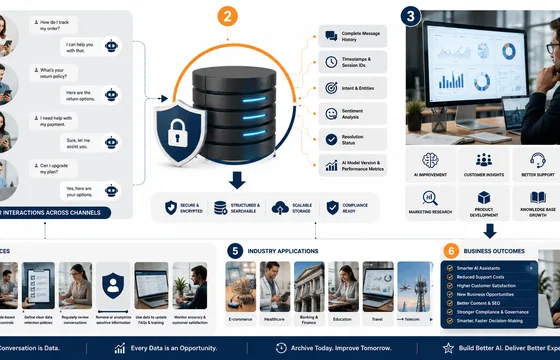
AI Chatbot Conversations Archive: Why It Matters in 2026
As conversational AI continues to evolve, businesses that invest in structured conversation archiving will be better equipped to understand their customers, optimize operations, and maintain a competitive advantage in an increasingly AI-driven world
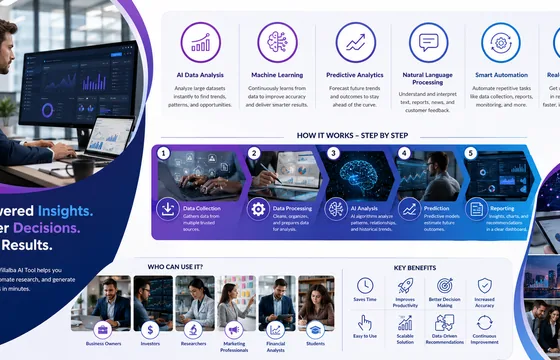
Abraham Quiros Villalba AI Tool: Features, Benefits, Use Cases & Everything You Need to Know (2026)
The Abraham Quiros Villalba AI Tool is an AI-powered platform designed to help users analyze complex data, automate research, and generate intelligent insights. It uses modern artificial intelligence technologies such as machine learning, predictive analytics, and natural language processing (NLP) to simplify decision-making across various industries.

AI Transformation Is a Problem of Governance, Not Just Technology
By treating AI transformation as a governance challenge rather than simply a technical upgrade, businesses can reduce risk, improve trust, ensure regulatory compliance, and create sustainable value. In an era where AI increasingly influences critical decisions, strong governance is no longer optional—it is the foundation of successful AI transformation.

AI Development Tools: A Practical Guide for U.S. Teams
Picking AI Development Tools is a lot like choosing tools for a kitchen remodel. The fanciest drill is not always the best one for the job. The same is true in software. A tool that looks impressive in a demo may feel clumsy once real work starts. The best choice is the one that fits your stack, your team, and your security rules.
AI Marketing Tools: A Practical Guide for Smarter Campaigns
AI Marketing Tools are now a practical part of modern marketing work. They help U.S. teams move faster, reduce repetitive tasks, and keep campaigns organized. They can draft copy, suggest visuals, summarize results, and support automation without taking over the job of the marketer.